

























2026 E-Bike System Selection Guide: Connectivity, OTA & Diagnostics
- 10 Mar, 2026
- Home
- 0 Comments
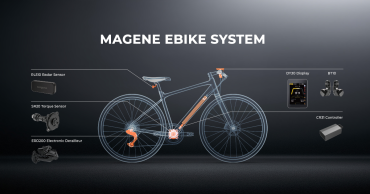
In commuter e-bikes slated for mass production by 2026, decision-making priorities are shifting from ‘single performance parameters’ towards ‘system-level maintainability’. This paper outlines an actionable system selection methodology and checklist for urban commuter E-bikes, tailored for engineering, procurement, and compliance teams. It centres on the dual pillars of ‘Integration and connectivity (CAN bus, vehicle lighting control/applications, OTA, diagnostics) + supply chain and after-sales (global service network, spare parts, delivery timelines, and lifecycle assurance)’.
How to Select an E-Bike System?
This article is aimed at product managers, system engineers, compliance officers, and after-sales network managers within e-bike OEM/ODM organisations. You will gain:
- A five-step methodology for selecting urban commuter e-bike systems and key acceptance criteria;
- Engineering implementation essentials concerning connectivity/CAN, OTA, and diagnostics;
- Supply chain and after-sales considerations for global sales, alongside minimum essential documentation requirements for compliance and transport.
Recommended approach: While reading, substitute your current candidate system brands into the scoring criteria outlined in the text. Use this to schedule prototype integration and prepare your dealer toolchain. In short, first ensure ‘connectivity, diagnostics, and over-the-air (OTA) updates’ are fully functional before discussing large-scale delivery and lifecycle support.
Five-Step Methodology for Selecting Urban Commuter E-Bike Systems
- 1. Define Requirements and Boundary Conditions (Model/Regulations/Regional Parameters)
- Urban commuting involves high usage frequency, frequent starts and stops, and significant night-time riding. Prioritise validation of light control integration, protective features, and the refinement of low-speed assistance. Regulatory targets must at minimum cover vehicle and battery safety requirements for the target market (see ‘Compliance and Transport’ below).
- 2. Establish a Comparison Matrix (Focusing on Connectivity/Diagnostics/OTA/Service Network)
- Score candidates along four main axes: ‘Connectivity Protocols & Interfaces (including CAN/Extension Ports) — Diagnostic Tools & Fault Codes — OTA Pathways & Signatures/Rollbacks — Dealer/Spare Parts Network & SLAs’. Only candidate systems providing verifiable documentation proceed to the next round.
- 3. Interface and Protocol Validation (Prototype Bench/Vehicle Level)
- Complete physical wiring, CAN topology and terminal resistance verification, ID allocation and heartbeat/timeout strategy testing on the bench or prototype vehicle. Conduct handshake and fault injection tests for lighting/sensors, HMI/displays and battery BMS.
- 4. OTA and Diagnostic Closed-Loop Exercises (Including Power-Off/Rollback/Logging)
- Verify mobile/shop-end update pathways, signature and version compatibility, resume-from-breakpoint functionality, and rollback procedures. Ensure dealership tools can export standardised diagnostic reports and reproduce common error code handling workflows.
- 5. Mass production and after-sales readiness (SLA/KPI and contractual essentials)
- Finalise after-sales access points and work order systems; agree spare part codes, minimum stock levels, mean time to repair (MTTR), first-time fix rate (FTFR), and annual OTA update responsibilities; incorporate lifecycle and replacement part guarantees into supply agreements.
Note: During Steps 1–2, avoid prioritising ‘peak power/torque’ prematurely. First establish the four foundational pillars—connectivity, diagnostics, OTA, and service networks—then optimise performance curves for greater efficiency.
Technical Focus: Connectivity, CAN, OTA, and Diagnostics
Connectivity and CAN: Is CAN ‘mandatory’? How should it be validated?
In premium e-bike systems, motor controllers, batteries/BMS, displays/HMIs, sensors, and lighting are frequently interconnected via CAN to leverage its advantages in interference resistance, topological flexibility, and diagnostic capability. It is crucial to note that no global regulation mandates CAN for e-bikes; manufacturers predominantly implement proprietary protocols or application layers based on CANopen. For reference on e-bike application layers, consult the ‘CiA 454’ data sheet published by CiA (CAN in Automation): see ‘Introduction to the CANopen e-bike Application Layer’.
Key engineering validation points:
- Complete physical layer verification (cabling, terminating resistors, shielding and grounding strategy);
- Define message IDs/priorities, heartbeat/timeout and degradation strategies;
- Conduct reproducible experiments and maintain logs for anomaly injection (plugging/unplugging, low voltage, communication jitter) affecting light control, HMI/display and BMS.
OTA: Both user-end and shop-end ‘pathways’ must be established
- Bosch provides user-facing Flow App OTA capability in the Smart System generation. The official help centre offers clear guidance on conditions, steps, and troubleshooting for ‘executing software updates via the eBike Flow App’; this provides an authoritative reference for OEMs evaluating ‘wireless update delivery rates/failure handling’ (see [Bosch Official: Performing Software Updates via the eBike Flow App]).
- Shimano employs its E-TUBE ecosystem to differentiate between ‘Cyclist (end-user app)’ and ‘Professional (dealer tools)’, requiring wired restoration and updates via SM-PCE02 in certain scenarios. This represents a critical link requiring thorough rehearsal within shop maintenance workflows for urban commuter models (see [Shimano Official: E-TUBE PROJECT Professional (Dealer Tools)]).
- Mahle announced in 2025 that firmware upgrades for the X20 system can be performed via Bluetooth using the My SmartBike App, with supplementary assistance from dealer tools in specific cases. The official content centre explicitly states that ‘65 Nm and 275 W peak’ represent scenario-based descriptions of ‘achievable through firmware upgrades’, facilitating OEM design version control and notification processes (see [Mahle Official: X20 System Upgrade Announcement]). ).
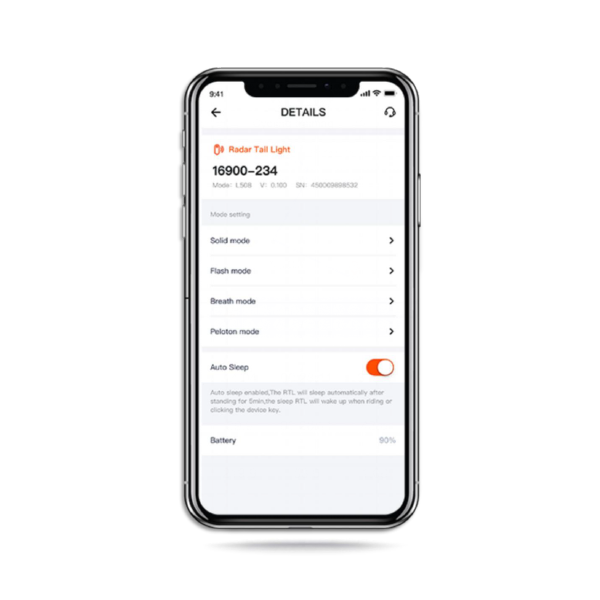
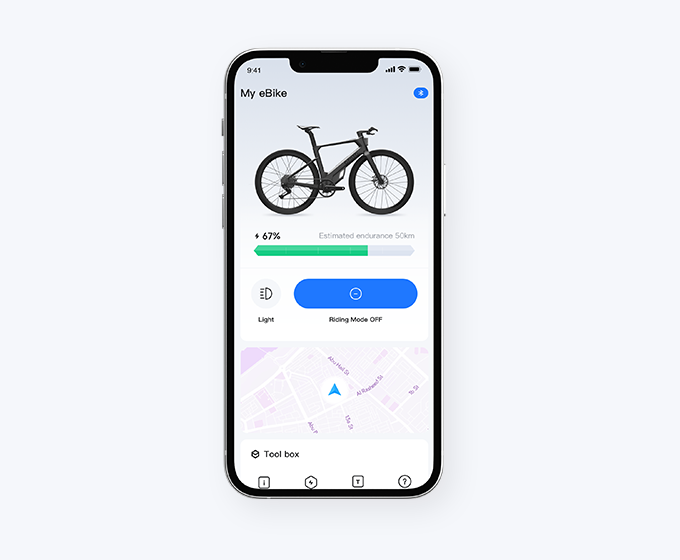
- Magene has also announced that its entire e-bike system can receive OTA updates via official apps: ‘eBike Factory’ and ‘eBike Connect’ (see [Magene Official: OTA Upgrade]).
Implementation recommendation: Incorporate both OTA pathways—user-end (app) and dealer-end (shop tools)—into acceptance scripts. Cover signature verification, power-off protection, rollback, and failure retries, while recording traceable logs.
Diagnostics and Error Codes: From ‘Readable’ to ‘Reviewable’
The objective of diagnostic tools is not merely “connectivity” but ‘generating reviewable evidence’. For retail outlets, standardised diagnostic reports (including hardware inventory, firmware versions, error history, and resolution recommendations) directly impact Mean Time to Repair (MTTR) and First-Time Fix Rate (FTFR). Manufacturers vary in the depth of information disclosed on public sites:
• Shimano's E‑TUBE Professional page emphasises ‘firmware updates, customised functions, status checks, and maintenance,’ providing FAQs and wired recovery pathways to facilitate standardised dealer operations (as per the aforementioned link).
• Some manufacturers restrict dealer tools and error code lists to authorised portals; for instance, Bafang's Downloads and Service Index centralises BESST/BESST Pro manuals, though specific capabilities and permissions remain subject to authorisation (see [Bafang Official Downloads/Service Index]).
Acceptance recommendation: Require candidate systems to generate a ‘complete diagnostic report sample’ at pilot outlets and demonstrate the troubleshooting loop (read – locate – recommend – retest) for three typical error codes: communication failure, voltage anomaly, and sensor failure.
Supply Chain and After-Sales: From “Deliverable” to “Sustainable”
Sales volumes and maintenance frequency of urban commuter vehicles dictate the need for a stable, predictable service network and parts system. Key performance indicators (KPIs) should be established across the following dimensions:
• Dealer and Service Network: Verifiable dealership/service provider access points and regional coverage density;
• Spare Parts and Manuals: Standardised spare parts coding, alternative parts strategy, and dealership-facing manual centre;
• Work Orders and SLAs: Mean Time to Repair (MTTR), First-Time Fix Rate (FTFR), Annual SLA Compliance Rate;
• Lifecycle and Compatibility: Firmware/hardware generation compatibility and upgrade strategies, end-of-life commitments and replacement part guarantees.
Operational Key Points: Synchronise ‘diagnostic tool accounts – spare parts lists – work order templates – return and faulty part recovery processes’ during prototype vehicle phase to avoid SOP backfilling after mass production. If candidate systems offer public download/manual indexes and distribution portals, this will significantly reduce post-launch friction costs (see earlier reference to official index and download centre).
Testing and Acceptance Recommendations for Urban Commuting Scenarios
• Low-speed refinement and start-stop consistency: Re-test assist curves using three combined scenarios—‘high-frequency start-stops—low-speed uphill—pedestrian zone crawl’—to validate peak response and decay consistency before and after firmware updates. Utilise official apps/shop tools for comparative logging (e.g., Bosch Flow, Shimano E-TUBE, which explicitly highlight ‘scenario-based improvements’ post-update).
• Light Control and HMI Integration: Verify power distribution and error prompt logic for constant-on/strobe/brake-linked modes. Conduct degradation strategy testing under ‘communication jitter and low voltage’ conditions.
• Protection and Rain Riding: Design splash and salt spray test windows based on IP ratings and precautions in motor/battery manuals (official manuals prevail), focusing on connector sealing and drainage pathways.
• Noise and Drag: Collect noise spectra and coasting resistance via comparative testing under fixed gear ratios and tension conditions to avoid subjective judgement; if anomalies occur, revert to installation and chain alignment specifications before system-level assessment.
Compliance and Transport: Minimum Essential Documentation and Verification Pathways
• North America: Whole-vehicle electrical system safety may refer to UL's UL 2849 standard page (subject to official and NRTL test documentation; see [UL Official: UL 2849 Standard Page]); battery packs typically require UL 2271 (see [UL Official: UL 2271 Standard Page]).
• EU: EPAC requirements can be retrieved via the European Commission's ‘Harmonised Standards (Machinery Directive)’ portal for the latest version of EN 15194 and Official Journal (OJ) publication details (see [European Commission: Machinery Directive Harmonised Standards Portal—EN 15194 Search]).
• Air Transport: Lithium battery air transport adheres to the IATA Lithium Battery Guidance Document (free PDF), published annually. Its alignment with UN 38.3 and packaging instructions serve as the authoritative reference for OEM shipping designs (see [IATA Official: Lithium Battery Guidance Document (PDF)]).
Conclusion: Establishing ‘Connectivity, Diagnostics, and Updates’ as Mass Production SOP
For 2026 urban commuter e-bike system selection, the core focus should not be chasing individual parameters, but rather deepening and mastering the four fundamental pillars: ‘Connectivity—Diagnostics—OTA—Service Network’. During prototype development, use standardised scripts to validate both OTA pathways and diagnostic reporting. Incorporate spare parts and lifecycle commitments into contracts, and solidify compliance and transport requirements with verifiable links. Once these ‘invisible capabilities’ are stabilised, refining the riding experience becomes far smoother. Let's embed this SOP into your production checklist and get cracking.
For more information about B2B services, please visit:
Website: b2b.magene.com
Email: sales-bd@magene.com






0 Comments